
Your Windows Are Leaking Money Every Cold Snap
Fogged panes, sweating frames, and drafts you can feel with the back of your hand. How to read the signs and pick a system and crew before winter books them out.
Part 1 of 3 in the series Steel & Sealed: The Metal Window Owner's Guide from Install Day to Decades Later.
Stand next to an old metal window on a cold morning and hold the back of your hand two inches from the frame. If the air feels like it came from outside, that is because it did. Metal moves heat fast, and a window system that has lost its seals, its thermal break, or its alignment becomes a slow, steady leak, a quiet one that shows up on your utility bill every month.
This three-part series was shaped in part by insights from Affordable Windows AZ, whose crews spend their days looking at what actually fails in metal window systems and why. This part covers catching failure early and choosing well, the next getting the install right, and the last the upkeep that decides whether your windows last five years or thirty.
Why Metal Windows Fail Quietly Instead of Loudly
Metal frames rarely break in an obvious way. Aluminum and steel expand and contract with every temperature swing, and over thousands of cycles that movement works against everything holding the assembly tight. Gaskets flatten, sealant beads lose their grip, fasteners loosen a fraction of a turn. Nothing looks broken, but the window no longer closes on a continuous seal.
Older aluminum windows often have no thermal break at all, so the outdoor frame and the indoor frame are one continuous piece of metal. That single detail can drop the interior surface temperature far enough to pull condensation out of your indoor air, and that moisture is where corrosion and stained sills begin.
Fall matters because every cold snap makes the same defect measurably worse than the last, and the calendar works against you too. Once the first real freeze hits, installation schedules tighten and lead times on custom sizes stretch, so you end up choosing whatever is available instead of what is right.
A Twenty-Minute Walk-Through of Every Window in the House
You do not need instruments for most of this. You need twenty minutes and a cold morning. Walk each window in the house and look for the specific tells below rather than a vague sense that the room feels chilly.
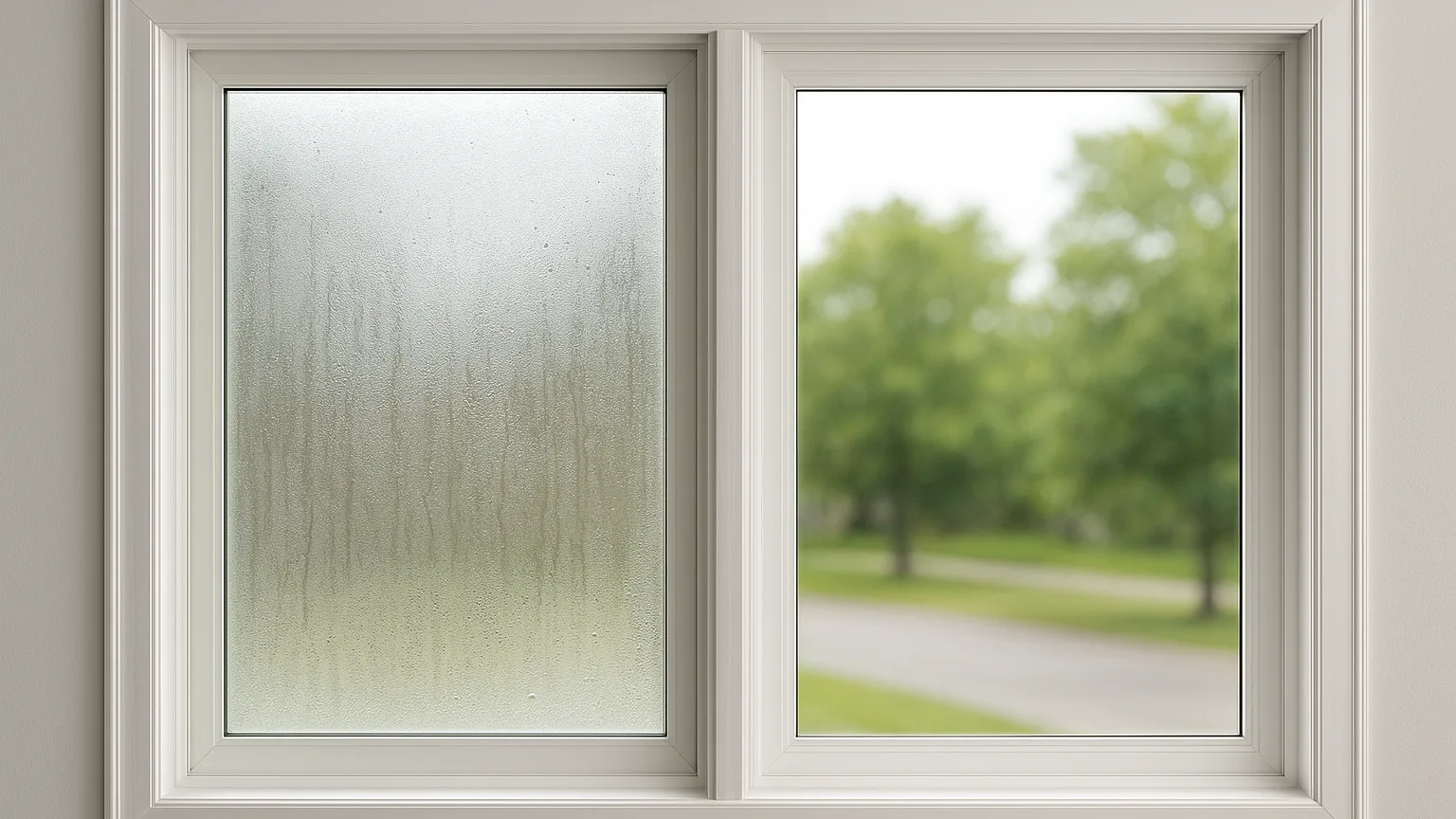
- Fog or haze between the panes. A failed insulated glass unit: the sealed gas is gone and moisture has replaced it. Cleaning will not fix it, and the pane has already lost most of its insulating value.
- A line of dust or grit along the sash seam. Air moving through a gap carries particles and leaves a trail that marks your leak path.
- Frost or beads of water on the interior frame. The metal is conducting cold straight through with no thermal break doing its job.
- Chalky white powder or bubbling on aluminum. Oxidation. On steel, look for orange staining at the corners and along the bottom rail where water sits.
- Sashes that stick, sag, or need a shoulder to close. The frame has racked out of square, so the seal cannot compress evenly along its length.
- Curtains that drift when everything is shut. That is a large leak, not a small one.
The Two-Minute Tests Worth Doing
Close a window on a dollar bill and pull. If it slides out with almost no drag, the compression seal is not compressing. Then light a stick of incense and trace the perimeter slowly, watching where the smoke bends or breaks apart. Corners and lock points are usually the worst offenders, and understanding where air coming through windows actually enters helps you decide whether you are looking at a repair or a replacement.
The honest dividing line: worn weatherstripping, a dry sealant joint, or a sticky lock are repairs. Fogged glass, a corroded frame, a racked opening, or a non-thermally-broken frame in a cold climate are replacement conversations. Patching those buys you one season and costs you the next.
Spec Sheets, Installers, and What Actually Matters
Modern metal windows are far better than the ones being torn out. Aluminum systems use a polyamide or polyurethane thermal break separating interior frame from exterior, and steel systems pair narrow sightlines with genuinely warm glass packages. But performance comes from the whole assembly working together, not the frame material alone.
What to Look for on the Spec Sheet
- A real thermal break in any aluminum frame going into a heating climate. Ask what material and how wide.
- U-factor low enough for your region, the single best number for comparing heat loss between two options.
- Air leakage rating. Lower is better, and this is the number that predicts drafts you will actually feel.
- Warm-edge spacers and inert gas fill in the glass unit, plus a low-E coating suited to your sun exposure.
- Multi-point locking on casements and awnings, which pulls the sash evenly against the seal instead of only at the handle.
- Finish quality. Powder coating or anodizing holds up far better than painted aluminum, especially near coastal air or road salt.
Vetting the Installer
The best window in the catalog performs like a cheap one if it goes in wrong. Ask how the installer handles flashing at the sill, whether they shim at the load points or only at the corners, and what sealant they use and how long it needs to cure. A crew that answers in detail is telling you something, and that care is what separates a clean job from the shortcuts that show up when one rushed install week invites gets rushed to fit one more house into the week.
Settle the practical terms before signing: lead time on your specific sizes in writing, who patches interior trim and exterior stucco or siding, and what the labor warranty covers separately from the manufacturer's glass and frame coverage. Guidance from the team at Affordable Windows AZ points to the same pattern again and again: measurement accuracy and opening prep, not the brand on the sticker, determine whether a window seals for decades.
Cold Air Is the Symptom, Not the Story
A draft is only the part of the problem you can feel. Behind it sits a chain of small failures: worn gaskets, a missing thermal break, an opening shifted out of square, water that never drained where it should. Fall is when all of that becomes obvious and still fixable, before the freeze widens every gap and every good crew in your area is booked into spring. Walk your windows this week, sort them honestly into repair and replace, and schedule measurements now.
Next we walk the install itself, hour by hour, where flashing, shimming, and sealant curing decide whether your new windows shed water or trap it. After that, skip this fall cleaning covers the seasonal routine that protects the investment: clearing weep holes, checking gaskets, lubricating hardware, and catching rust while it is still a stain instead of a hole.
Ready for Custom Aluminum Windows Built in Southern California?
The Metal Window manufactures custom aluminum windows and doors to your exact specifications. Tell us about your project and get a free quote.
Get a Free QuoteMore Expert Guides
Keep reading. Practical advice on aluminum windows, doors, glass, and finishes from the team that builds them.


I’ve used the The Metal Window before and it was great! I was pleased once again. Staff was very nice and really went the extra mile to help us out!
Ralph
Professionalism, Punctuality, Quality, Responsiveness, Value. Everyone was professional and offered amazing custom window service.
