
Your Metal Windows Will Outlive You, If You Feed Them
Weep holes, gaskets, hardware, and the orange freckle that becomes a hole. A four-season routine that takes twenty minutes and saves a frame.
Part 3 of 3 in the series Steel & Sealed: The Metal Window Owner's Guide from Install Day to Decades Later.
Part two walked through what a careful install week looks like: opening prep, thermal breaks, flashing laps, sealant given time to cure. Now comes the part nobody plans for, the twenty or forty years after the crew packs up. A metal window is one of the longest-lasting things in your house, but only if somebody wipes it down twice a year and pays attention to what it is trying to tell you.
This series was shaped in part by the field experience of Affordable Windows AZ, whose crews see the same pattern: the frames that fail early are almost never the ones that were built badly. They are the ones that sat under sprinkler spray, packed with dust, with four blocked weep holes and a crank that has not been oiled since the Obama administration.
Rust Does Not Announce Itself, It Auditions
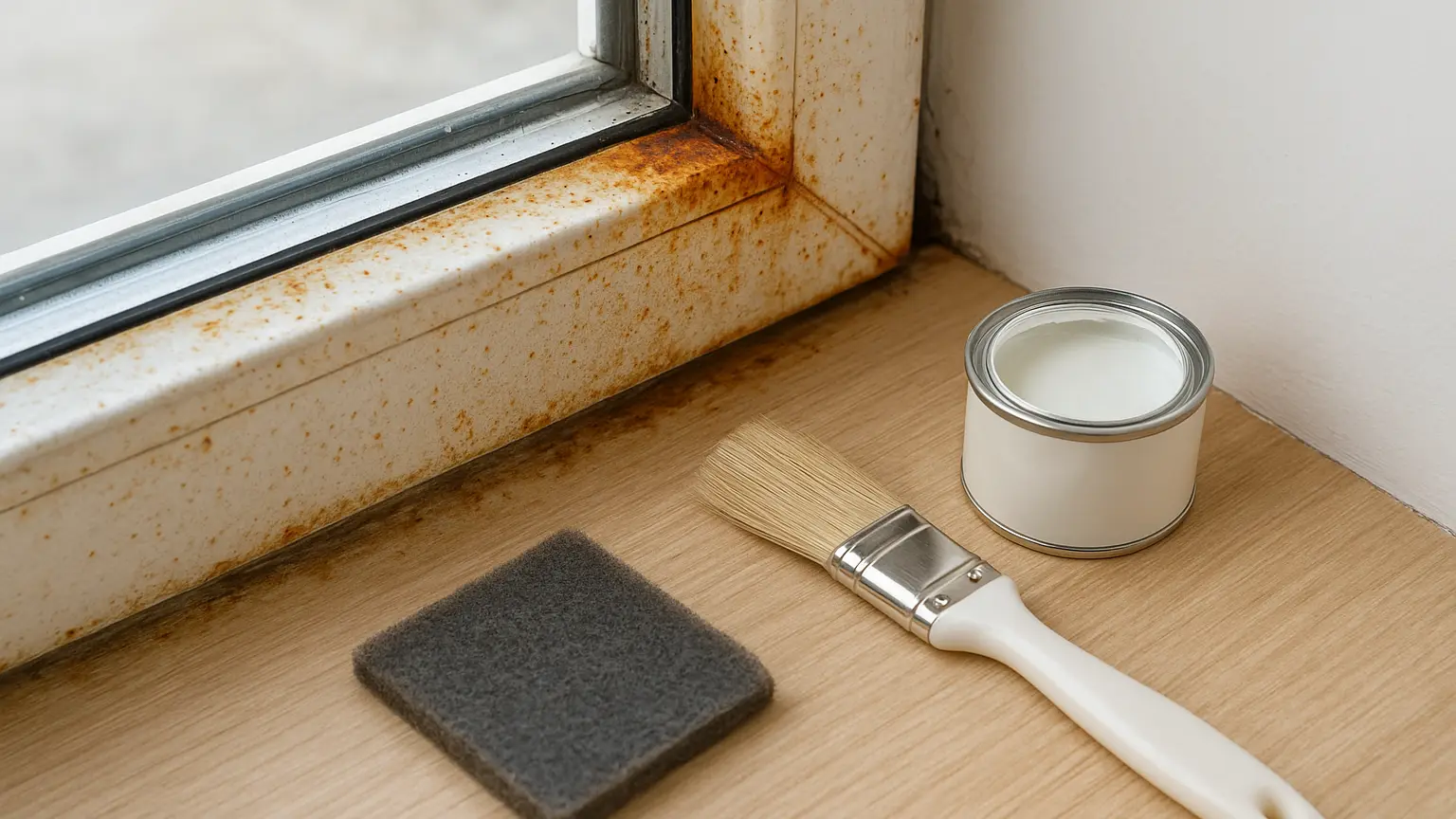
Steel and aluminum frames do not rot from the outside in. They fail at tiny breaks in the finish, where a ladder tapped the sill, where a screw head sits proud, where a gasket pulled away and left a shallow puddle. Water sits there, dries, comes back, and each cycle chews a little deeper. Up close, the early stage looks like this:
- Orange freckling along the bottom rail or corner joints, so light it looks like dirt until you rub it.
- Bubbling or blistering paint, meaning corrosion is already working under the coating.
- Chalky white powder on aluminum, early oxidation that dulls the finish and holds moisture.
- Dark staining below a screw or hinge, the classic sign that a fastener is the entry point.
- A gritty feel on a surface that used to be smooth.
Catch it at the freckle stage and the fix is fifteen minutes with a scuff pad, a solvent wipe, primer, and matching touch-up paint. Ignore it for four winters and you have pitted metal, a sash that no longer seats, and a glazing pocket that leaks.
Why Fall Is the Hinge Point of the Year
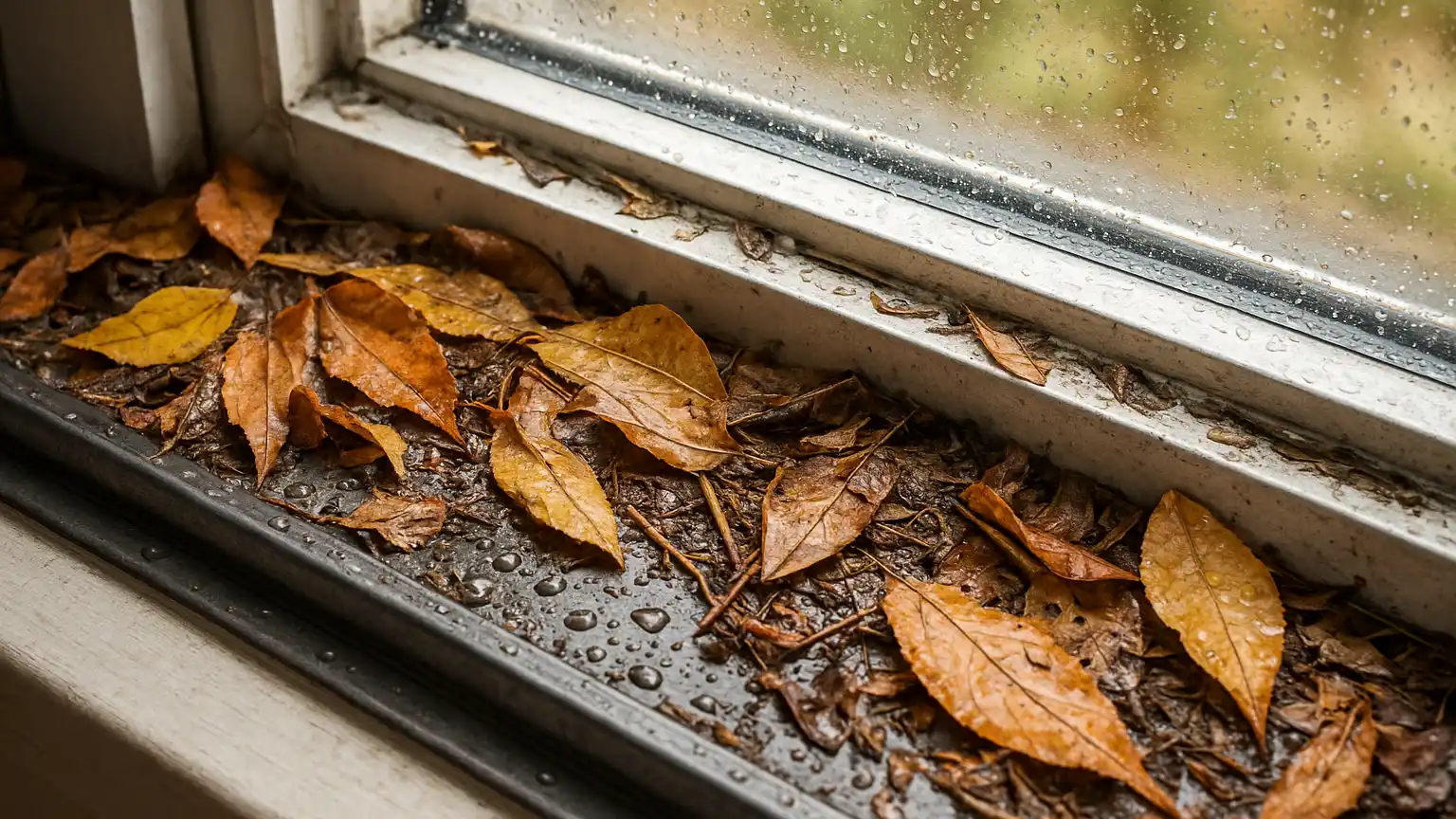
Fall is when the debris and the weather arrive at the same time. Leaf litter, seed pods, and summer dust settle into the sill track just before the wet months start pushing water down that same channel, and whatever sits there in October becomes a damp poultice against your frame until spring. Anyone who has read about the drafts and fogged glass that show up when that cold draft is cash hits knows the rest: neglected maintenance accelerates every one of those symptoms. A gasket that dried out in August is the same gasket that whistles in January.
Twenty Minutes a Season, One Bucket of Supplies
You do not need a maintenance binder, just four short appointments a year, twenty to forty minutes per pass on an average house, and a small kit that lives in one bucket.
Fall: The Big One
Vacuum the sill tracks with a crevice tool, then wash the frames with mild dish soap, warm water, and a soft cloth. Skip anything abrasive, ammonia-based, or sold as a heavy-duty degreaser, because those strip protective coatings faster than weather does. Rinse, towel dry, and inspect every corner joint while the surface is clean and honest. Clear the weep holes last, then wipe and lubricate the hardware.
Winter: Watch and Listen
No scrubbing in freezing weather. Walk through on the coldest, windiest day you get, running the back of your hand around each sash perimeter. Interior condensation pooling on the sill points to a gasket or drainage problem, not a glass problem. Note which windows sweat and which stay dry; that list tells you where to focus in spring.
Spring: Repair Season
Rinse off winter salt, grit, and road film, then handle whatever winter exposed: touch up chips, replace a cracked gasket, re-caulk an opened joint, deal with any freckling you flagged. Cycle every operator and lock. A binding casement crank means the hinge track is dirty or the sash has dropped, not that it needs more force.
Summer: Keep Water Off the Metal
Adjust sprinkler heads so they never strike the glass or sill, because mineral-heavy irrigation water is brutal on finishes and seals. Trim shrubs back a foot so air can move and moisture can dry. Check exterior sealant beads for the shrinkage and cracking that heat cycling causes. Homeowners who did their homework for a window installation adapt to this rhythm quickly, since the same thinking about water paths and clearances applies long after the crew leaves.
What Belongs in the Bucket
- Mild dish soap, two soft cloths, a soft-bristle brush
- Shop vacuum with a crevice tool
- A pipe cleaner, thin wire, or short length of weed-trimmer line for weep holes
- Silicone spray for gaskets, and light dry lubricant or white lithium grease for hinges, cranks, and rollers
- Rust-converting primer and touch-up paint matched to your frame finish
- Fine scuff pad and a clean solvent wipe
Drainage, Rubber, and Moving Parts, Up Close
Weep Holes Are the Whole Ballgame
Those slots along the exterior bottom of the frame drain the water that gets past the outer seal, which is normal and expected. Block them with dust, paint, caulk, or a wasp nest and water backs up in the sill channel, sitting against metal and against the bottom of the insulated glass unit: rust from the inside and a failed seal at once. Test them by pouring a cup of water into the interior sill track and watching the exterior, where it should trickle out within a minute. If nothing appears, clear the holes with a pipe cleaner or trimmer line, never a drill bit or anything stiff enough to gouge, then test again. Every fall, without exception.
Gaskets and Seals Want Conditioning, Not Replacing
Rubber and EPDM gaskets fail by drying out, hardening, and losing their memory; once flattened, they stop bridging the gap and the frame stops being weathertight. A light silicone spray wiped along them once or twice a year keeps them flexible for years longer. Press one with your thumb: it should feel springy and push back. If it feels like a plastic strip and stays dented, that section needs replacing, which is far cheaper than replacing a sash.
Hardware Rewards Small Doses of Oil
Cranks, hinge arms, rollers, latches, and pivot bars are all metal on metal. Clean the grit off first, because lubricating over dirt makes a grinding paste. Apply lubricant sparingly to moving contact points, cycle the mechanism, and wipe the excess. Do not soak slider tracks; a greasy track collects dust and becomes sludge that stalls the panel. The crews at Affordable Windows AZ point out that stiff hardware is usually the first complaint on a window that is otherwise structurally fine, so a two-minute habit heads off a service call, and it protects the shimming and squaring that mattered when one rushed install week invites was the concern.
The First Signs You Need a Professional
Bring in a pro for through-rust or perforation in the frame, glass fogging between panes, a sash that no longer meets its frame evenly, sealant failure at the flashing line, or water appearing on the wall below the window rather than on the sill. Those are structural or envelope issues, and waiting turns a repair into a replacement.
Thirty Years Is a Choice, Not a Warranty
Good products and good installers give you the potential. A soapy bucket, a clear weep hole, a springy gasket, and a drop of oil on a hinge are what convert it into decades. Put it on the calendar for October, right beside gutter cleaning, and give it half a morning. You will catch the orange freckle while it is still a freckle, and you will go into every storm knowing water has somewhere to go. Metal windows do not fail because metal is weak. They fail because nobody was watching.
Ready for Custom Aluminum Windows Built in Southern California?
The Metal Window manufactures custom aluminum windows and doors to your exact specifications. Tell us about your project and get a free quote.
Get a Free QuoteMore Expert Guides
Keep reading. Practical advice on aluminum windows, doors, glass, and finishes from the team that builds them.


I’ve used the The Metal Window before and it was great! I was pleased once again. Staff was very nice and really went the extra mile to help us out!
Ralph
Professionalism, Punctuality, Quality, Responsiveness, Value. Everyone was professional and offered amazing custom window service.
