
The Small Plastic Strip That Makes Aluminum Windows Feel Like a Different Product
A thermal break is a few millimeters of insulation hidden inside the frame, and it is the difference between a window that sweats and one that just works. Here is how it earns its keep.
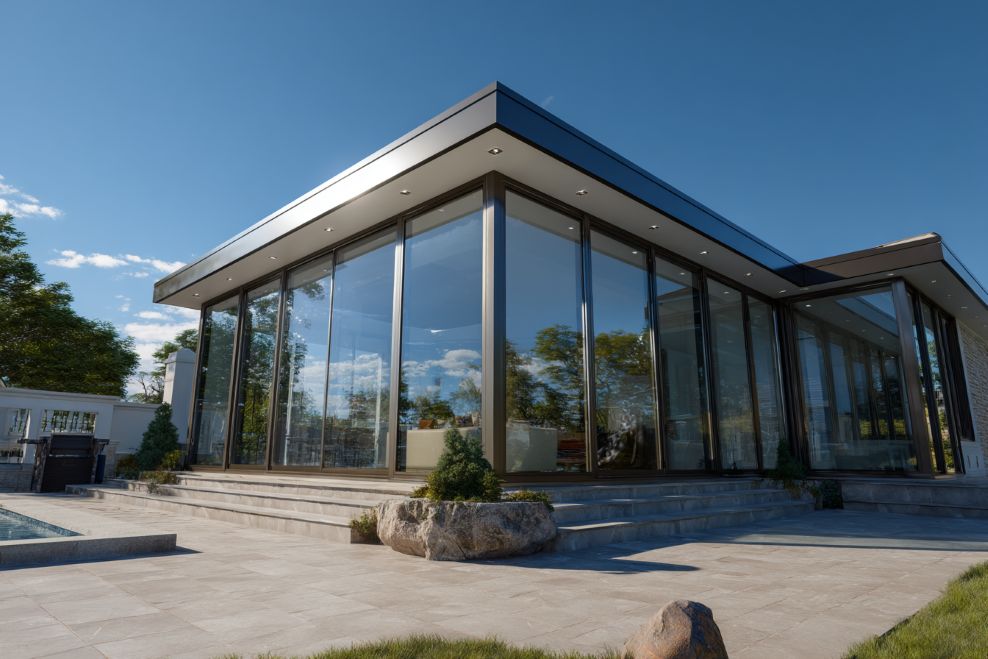
Press your palm against an old aluminum window frame in Riverside at four o'clock on a July afternoon and you will understand thermodynamics faster than any textbook could teach it. That frame is a highway for heat, and every degree it carries indoors is a degree the air conditioner has to fight. The strange part is that the fix has existed for decades, weighs almost nothing, and is invisible once the window is installed.
It is called a thermal break, and it is the reason modern aluminum windows perform in a completely different league from the ones on a 1970s ranch house in the Valley. This guide explains what a thermal break is, how it changes the way a window behaves in a Southern California home, what it does to your energy bill and your comfort, and how to tell a real thermal break from a marketing phrase when you are staring at a quote. Whether you are building new in Temecula or replacing the windows on a beach cottage in Oceanside, this is the one aluminum window concept worth understanding before you sign anything.
Aluminum Is a Wonderful Frame With One Honest Flaw
Aluminum is strong, light, stable, and immune to rust, which is why it dominates everything from airplane wings to storefronts along Ventura Boulevard. It is also one of the best heat conductors you can build with. A bare aluminum frame conducts heat hundreds of times faster than a wood frame, so on a hot day the exterior surface warms up and that heat rides straight across the frame to the interior. In winter the same path runs in reverse, pulling warmth out of the room and chilling the inside of the frame until moisture in the air condenses on it.
That conduction is the source of nearly every complaint about older aluminum windows: the hot frame, the cold frame, the puddle on the sill, the faint draft near the glass that is not really a draft at all but radiant heat loss. None of those complaints are about aluminum being a bad material. They are about a solid metal bridge running from outside to inside with nothing to slow it down.
How a Thermal Break Actually Works
A thermally broken frame is really two aluminum frames, an outside half and an inside half, joined by a strip of low-conductivity material so that metal never touches metal from exterior to interior. The strip is usually a reinforced polyamide, a tough engineering plastic, and it is either rolled into grooves in the extrusion under pressure or cast in place as a polyurethane pour that is then cut to separate the halves. Either way, the result is a frame that looks and feels like solid aluminum on both faces but has an insulating gap running through its core.
The width of that gap matters. Early thermal breaks were only a few millimeters wide and helped modestly. Current residential systems use breaks from roughly fourteen to thirty-plus millimeters, and the wider the break, the less heat crosses the frame. When you see two aluminum windows with very different U-factors, the width and design of the thermal break is usually the biggest reason.
What Changes Inside the House
- Interior frame temperature stays close to room temperature, so the frame stops radiating heat at you in summer and stops pulling warmth out of you in winter.
- Condensation drops sharply because the inside surface no longer falls below the dew point on a damp coastal morning.
- Whole-window U-factor improves enough to move a window from failing Title 24 prescriptive targets to passing them with margin.
- HVAC runtime falls, which shows up on the bill and also in how often the compressor cycles during a Santa Ana heat event.
- Noise transmission is often slightly reduced, since the discontinuous frame breaks up vibration paths along with heat paths.
What It Means for Comfort and Bills in a Southern California Home
Energy modeling tends to talk in percentages that feel abstract, so think about a west-facing family room in Corona with a big slider and two casements. On a bare aluminum frame, the metal itself can reach surface temperatures well above the air temperature by late afternoon, and that heat radiates into the room long after the sun drops behind the neighbor's roof. A thermally broken frame with low-E glass keeps the interior metal near the room temperature, so the room stops feeling like it has a radiator under the window. The air conditioner reaches its set point sooner and stays off longer.
Near the coast the benefit flips to the cool season. On a foggy February morning in Manhattan Beach, indoor humidity from cooking and showers meets a cold frame and turns into water on the sill. Over years that water stains drywall, feeds mildew in the corners, and slowly attacks the finish. A thermal break keeps the interior frame warm enough that the moisture stays in the air where it belongs. That is not just a comfort improvement. It is a maintenance improvement that protects the wall around the window.
A Note on Glass
The frame is only part of the assembly. A thermally broken frame with clear single glazing would still perform poorly, because the glass is most of the opening. The break earns its full value when it is paired with a double-pane low-E insulated glass unit, warm-edge spacers, and an argon fill. Choosing the right glass for metal windows is its own decision, and the two should always be specified together.

How to Verify a Real Thermal Break on a Quote
The phrase gets used loosely, so it pays to check. A genuine thermally broken window will have a few things you can ask for and confirm. First, ask for the NFRC label data, which lists the whole-window U-factor and solar heat gain coefficient measured to a national standard. A thermally broken residential aluminum window with good glass typically lands at a U-factor that is comfortably below what a bare frame can achieve. If the number looks like a bare frame, it probably is one.
Second, ask to see a frame section cut or a profile drawing. You should be able to spot the polyamide strut or the poured and debridged channel running between the interior and exterior halves. Third, ask how the frame is fastened. Installation screws that punch straight through the break defeat it, so the manufacturer should specify fastening locations that stay in the outer or inner half of the frame.
Questions Worth Asking Before You Sign
- What is the thermal break material and how wide is it in millimeters?
- Is the NFRC rating for the whole window, including the glass I am actually ordering?
- Which climate zone was the Title 24 compliance calculated for, and does it match my address?
- How are the frames anchored so the break is never bridged by a screw or a metal shim?
- What finish protects the exterior half, and is it rated for coastal exposure if I am near the water?
Where Thermally Broken Aluminum Fits Best
Every home benefits, but some benefit dramatically. Inland homes with large west or south exposures see the biggest cooling savings. Coastal homes with humid winters see the biggest reduction in condensation and finish damage. Homes with big glass, like hillside moderns above Studio City or view homes in Rancho Palos Verdes, benefit because the frame area is large and a slim thermally broken aluminum profile keeps the sightlines clean without giving up performance. If you are weighing frame materials more broadly, the comparison of aluminum versus steel frames for Southern California homes covers the structural and corrosion side of the same decision.
Thermally broken aluminum also pairs naturally with custom sizes. Because the extrusions are manufactured rather than milled, an odd-sized transom or a fourteen-foot multi-slide door can be built to the opening with the same thermal performance as a standard window. That flexibility is why custom aluminum windows have become the default for remodels across Los Angeles, Orange County, and San Diego, where almost no two openings match.
Small Strip, Big Difference
A thermal break is a few millimeters of polyamide hidden inside a frame, and it quietly rewrites the reputation of aluminum windows. It keeps the interior frame close to room temperature, so hot inland afternoons stop leaking through the metal and damp coastal mornings stop leaving water on the sill. It lets an aluminum window pass California energy code with margin, lowers HVAC runtime, and protects the drywall and finishes around the opening for decades.
The homeowners who get the most out of it are the ones who verify it: NFRC numbers for the whole window, a visible break in the profile, a fastening plan that never bridges it, and glass specified to match. Get those four things right and aluminum stops being the frame you tolerate and becomes the frame you would choose again. When you are ready to size it to your openings, reach out to The Metal Window and ask for a thermally broken quote by the numbers.
Ready for Custom Aluminum Windows Built in Southern California?
The Metal Window manufactures custom aluminum windows and doors to your exact specifications. Tell us about your project and get a free quote.
Get a Free QuoteMore Expert Guides
Keep reading. Practical advice on aluminum windows, doors, glass, and finishes from the team that builds them.


I’ve used the The Metal Window before and it was great! I was pleased once again. Staff was very nice and really went the extra mile to help us out!
Ralph
Professionalism, Punctuality, Quality, Responsiveness, Value. Everyone was professional and offered amazing custom window service.
