
The Hidden Glass Layer That Keeps Summer Outside
Not all low-E glass blocks summer heat. Find out which coating keeps rooms bright and cool, protects floors from fading, and helps solar panels pay off.
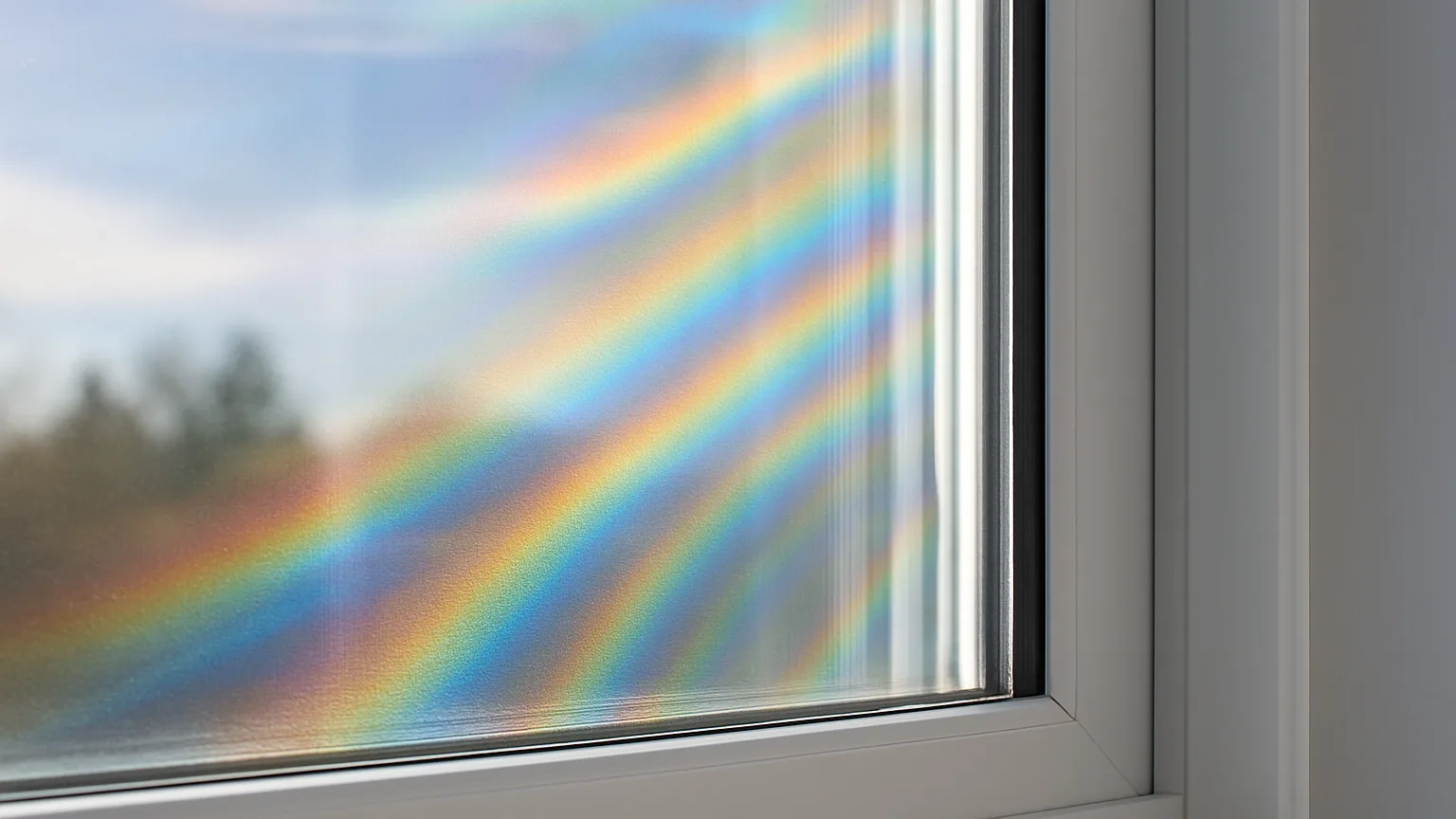
Most people pick new windows by the frame: color, style, how the handle feels. The glass gets about thirty seconds of thought. That habit costs money, because glass makes up most of a window and decides how hot your rooms get, how much your floors fade, and how hard your air conditioner works.
Here is the twist. Many homeowners pay for "energy efficient" glass and still end up with a living room that bakes every afternoon. The glass was not bad. It was just the wrong coating for the job.
What the Sun Actually Sends Through Your Windows
Sunlight is a bundle of three kinds of energy, and each one affects your home differently.
- Visible light: The part you see. It brightens rooms for free.
- Infrared light: The part you feel as heat. This is what makes a sunny room feel like an oven.
- Ultraviolet (UV) light: The part that fades rugs, wood floors, art, and fabrics.
Plain clear glass lets almost all three pour in. Solar control glass sorts them, keeping the light and blocking the heat and UV, like a bouncer who knows exactly who gets in.
The Three Numbers on the Window Sticker
Every rated window comes with a label most buyers skim. Three numbers on it tell you nearly everything about how the glass handles the sun.
Solar Heat Gain Coefficient (SHGC)
This shows how much of the sun's heat gets through, on a scale from 0 to 1. Lower means cooler. Clear double pane glass sits around 0.70; a strong solar control coating can drop that to about 0.25.
“In a place like Arizona, SHGC is the number I'd check first, because afternoon sun pouring through west-facing glass can quietly undo the savings a home gets from everything else on the roof,” says Marcus Delgado, senior energy consultant at Capital Energy. A low rating on the sticker is often the difference between a room that holds steady and one that overheats by four o'clock.
Visible Transmittance (VT)
This shows how much daylight gets through. Higher means brighter. Cheap tints lower heat by darkening the glass, which also kills your view and your natural light.
U-Factor
This shows how well the whole window holds in heat or cool air. Lower is better. It matters most in cold months and for homes with big walls of glass.
If you are weighing options for slim frames, the guide to choosing glass for metal windows walks through how these numbers interact with frame type. For now, remember one idea: you want low SHGC and high VT at the same time. That pairing is rare, and it is where the skipped coating comes in.
Low-E stands for low emissivity: a metal coating too thin to see that reflects heat while letting light pass. Almost every new window comes with some kind of low-E, from basic vinyl units to the best metal windows for new builds, which is why buyers assume they are covered.
But not all low-E is the same. The basic version is made mostly to hold heat inside in winter and does little against summer sun. On a west wall in July, it can feel close to no coating at all.
The option most people never ask about is spectrally selective low-E. It usually has two or three layers of silver instead of one, tuned to block infrared heat while keeping most visible light. The glass still looks clear and the room still feels bright. The heat just stays outside.
Why Buyers Skip It
This is not a hidden product. It is just easy to miss:
- Quotes often list "low-E" with no detail about which type.
- Many sales reps default to one glass package for the whole house.
- The upgrade adds a modest cost per window, so it gets cut to trim the budget.
- The glass looks nearly identical to basic low-E in the showroom.
To spot it, use the light to solar gain ratio, sometimes shown as LSG: divide VT by SHGC. A result of 1.25 or higher means the glass is spectrally selective. If your quote does not show both numbers, ask for them.
Where the Coating Sits Matters Too
Most double pane windows have four glass surfaces, counted from the outside in: surface one faces the street, surface four faces your sofa. A coating on surface two catches heat before it enters the air gap, making it the best spot for blocking summer sun.
Some makers add a second coating on surface four, which reflects warmth back into the room in winter and lowers the U-factor. In mild or hot climates, the surface two coating does the heavy lifting. In mixed climates, using both can make sense.
A Real Afternoon Test
Picture two west-facing bedrooms side by side, one with basic low-E, the other with a triple silver coating. At 4 p.m. in August, put your hand on the glass. The first pane is warm to the touch; the second stays close to room temperature. The bed, the carpet, and the person napping on it all get the same break.
Desert homes show this effect most clearly, and one breakdown of window coatings ranked by cooling savings weighs each option against what it costs up front. The pattern holds in any sunny region, the same strong sun that makes rooftop solar hot water worth considering: the walls that face the late sun pay back the upgrade fastest.
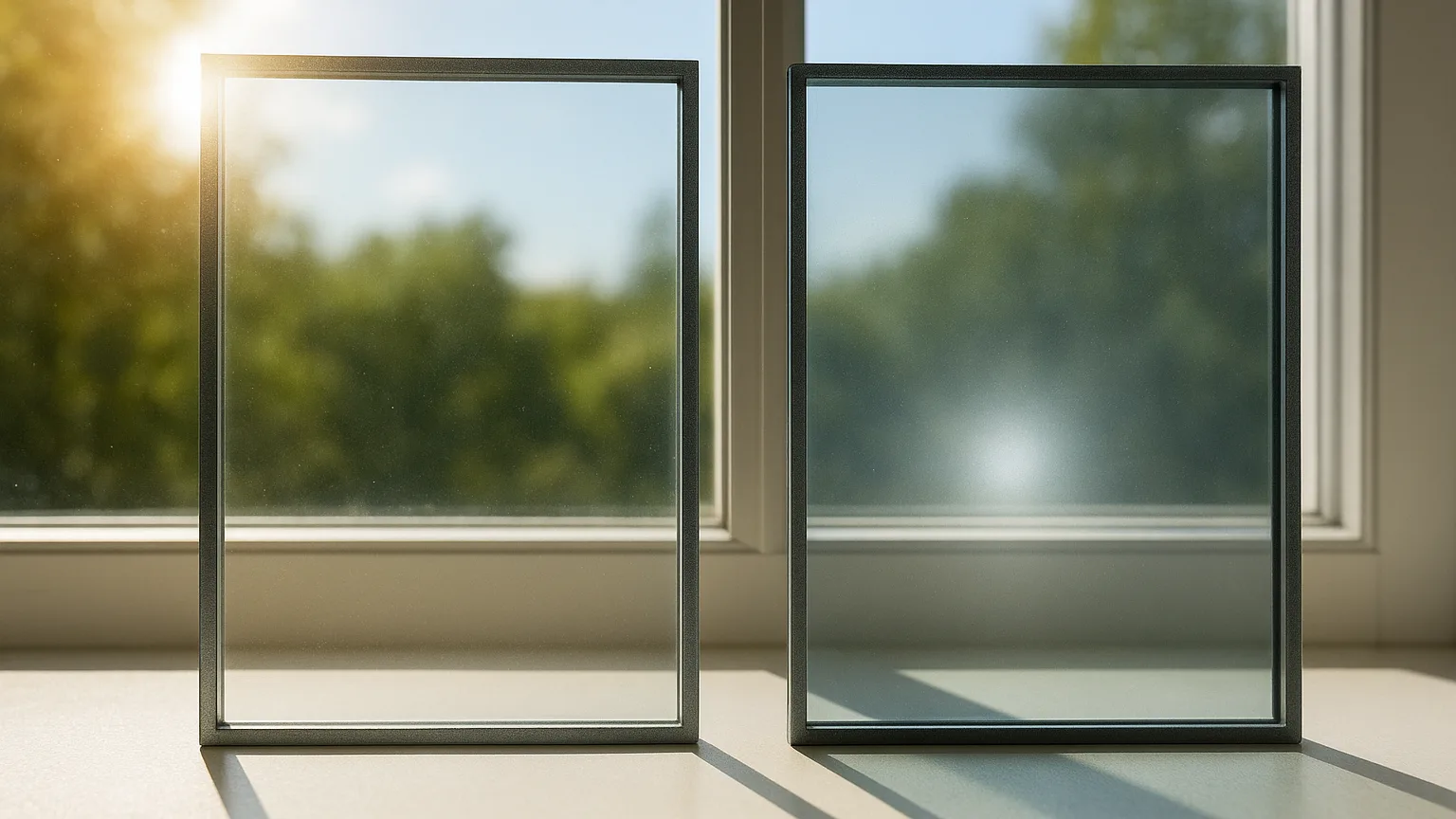
Your house does not get the same sun on every side, so why buy the same glass for every window? Mixing glass by direction is one of the smartest moves you can make, and few people do it.
A Simple Direction Plan
- West: The harshest sun, low and hot in late afternoon. Use the lowest SHGC you can find, ideally 0.25 or less.
- South: Strong sun, but higher in the sky in summer, so overhangs help. A low SHGC still pays off in warm climates.
- East: Bright morning sun with strong glare but less heat buildup. A moderate SHGC works well.
- North: Soft, steady light with little heat. Focus on a good U-factor and high VT to keep rooms bright.
In cold regions, some homeowners even want a higher SHGC on south windows to collect free winter warmth. The point is to choose on purpose, not by default.
Fading: The Slow Cost Nobody Budgets For
Faded floors and sun bleached couches sneak up on you. UV light causes a big share of that damage, but visible light and heat play a part as well. Good low-E coatings block most UV, and spectrally selective glass also cuts heat, which slows fading even more. It will not stop it fully, so pair the glass with shades or shutters on your sunniest windows to help furniture and wood floors keep their color.
How Solar Control Glass Helps Solar Panels Pay Off
If you have solar panels or plan to add them, whether on your own home or on leased rental properties, your windows change the math. Every bit of heat your glass blocks is cooling your panels do not have to power. That can mean a smaller system, a faster payback, or more power left to store in a battery.
"People spend months picking panels and batteries, then let the west windows undo a chunk of the savings," says Marcus Delgado, senior energy consultant at Capital Energy. "When we size a system for a home with good solar control glass, the cooling load drops and the numbers look a lot better."
Frames matter too. Glass can only do so much if heat moves straight through the metal around it, which is why thermally broken aluminum frames are worth a look alongside any coating upgrade.
Quick Answers to Common Questions
Does solar control glass look tinted?
Spectrally selective glass looks nearly clear, though some types show a faint cool or neutral tone from the street. Ask to see a sample in daylight before you order.
Will it make my home too dark?
Not if you check the VT. Look for 0.50 or higher on most windows.
How much can it lower energy bills?
It depends on your climate, window size, and which way the glass faces. Homes with large west or south windows in hot areas tend to see the biggest drop in cooling costs, so those walls are where comparing glass costs against savings pays off first.
Can I add it to my current windows?
The coating is applied at the factory, so it comes with new glass. Window film works on existing panes, but it usually does not match the clarity or lifespan of a factory coating.
Let the Light In, Leave the Heat Behind
Solar control glass keeps the daylight you want and turns away the heat and UV you do not. Basic low-E helps in winter, but the spectrally selective coating is the one that tames hot afternoons, slows fading, and trims cooling bills.
That extra step is easy to skip, which is exactly why so many people regret it later. Ask which low-E you are getting and where the coating sits, read the SHGC and VT on every quote, confirm the ratio lands at 1.25 or higher, and get the numbers in writing. Match the glass to each side of your home instead of buying one package for all of it. If solar panels are part of your plans, treat the windows as part of that system. Get the glass right once, and your home stays brighter, cooler, and cheaper to run for decades.
Ready for Custom Aluminum Windows Built in Southern California?
The Metal Window manufactures custom aluminum windows and doors to your exact specifications. Tell us about your project and get a free quote.
Get a Free QuoteMore Expert Guides
Keep reading. Practical advice on aluminum windows, doors, glass, and finishes from the team that builds them.

I’ve used the The Metal Window before and it was great! I was pleased once again. Staff was very nice and really went the extra mile to help us out!
Ralph
Professionalism, Punctuality, Quality, Responsiveness, Value. Everyone was professional and offered amazing custom window service.
