
Black Frame Windows Are Having a Moment. But Is That Moment Still Yours to Take in 2026?
Black frame windows took over every renovation feed for a reason. Here's whether they still hold up in 2026 or if it's time to rethink your next project.
What started as a niche architectural detail borrowed from industrial lofts and European steel-frame construction has quietly become one of the most searched window decisions a homeowner can make. Black frame windows are no longer a specialty request — they are showing up in new builds, gut renovations, suburban ranch remodels, and high-end custom homes from Phoenix to Portland. The conversation has shifted from "have you seen those black windows?" to "should I get those black windows?" and that shift says a lot about where residential design stands right now.
According to Houzz, black and dark-toned window frames consistently rank among the top exterior upgrade requests homeowners bring to contractors during renovation planning. That kind of staying power does not happen with a trend — it happens with a genuine design shift. But staying power and smart investment are two different things. Before you commit to black frames for your next project, it is worth understanding exactly what you are getting, where they work brilliantly, and where they can quietly work against you.
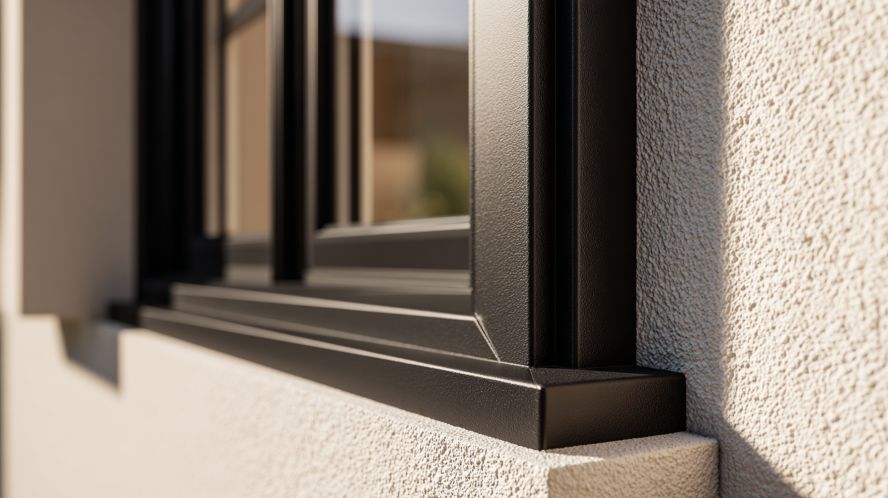
The Case For Black Frames in 2026
The strongest argument for black window frames in 2026 is not that they are popular. It is that they have survived long enough to stop being a trend and start being a standard. That is a meaningful distinction, and it is one that separates a smart long-term investment from a decision that ages poorly.
Here is what makes them a genuinely strong choice right now:
- Curb appeal that holds up over time. Unlike decorative exterior accents that date quickly, the contrast created by dark frames against a light facade reads as intentional and architectural rather than fashionable. It is a choice that tends to look more considered as years pass rather than less.
- Compatibility across styles. Whether you are working with a craftsman exterior, a mid-century modern layout, or a clean contemporary build, black frames integrate without demanding a specific aesthetic commitment from everything around them.
- Resale appeal. Buyers in the current market recognize the look and respond to it positively. It reads as a premium finish even when the underlying window is not the most expensive option available.
- Finish durability has improved considerably. Early concerns about dark frames fading or chalking under direct sun have largely been addressed by modern powder coating and anodized aluminum technology. Quality black frames today are built to hold their color through years of UV exposure without the chalky degradation that plagued earlier versions.
- They scale with the project. A single large picture window in a black frame makes a statement. So does a full bank of casements running across an entire wall. The frame color scales with the scope of the project rather than dictating what that project has to be.
Where Black Frames Can Work Against You
No design choice is without tradeoffs, and being honest about the limitations is part of making the right call for your specific situation. Black frames reward the right conditions and punish the wrong ones more visibly than a neutral frame finish would.
In smaller rooms with limited natural light, black frames can read as heavy and closing rather than bold and defining. The visual weight of a dark frame in a north-facing bedroom, for example, can make an already dim space feel more compressed. The same quality that makes black frames sing in a sun-drenched great room with tall ceilings works against you when the light simply is not there to carry the contrast.
There is also the heat absorption question, which matters significantly in climates like Arizona, Texas, and Southern California. Dark frames absorb more solar heat than lighter ones, and in regions where exterior temperatures regularly push past 110 degrees, that can place added thermal stress on both the frame and the seal around the glass unit. This does not make black frames a poor choice in hot climates. Many manufacturers build specifically for high-heat environments. But it does mean the quality of the frame and the thermal break inside it matters more than it would in a milder region. Cutting corners on a budget black-frame window in Phoenix carries a different level of risk than making the same cut in Seattle.
Finally, there is the maintenance visibility issue. Dust, hard water spots, and surface oxidation show more clearly on a dark frame than on a white one. In dry and dusty environments especially, this means more frequent cleaning to keep the exterior looking as sharp as it did on installation day.
When Frame Style Meets Window Type
Choosing a frame color is only half of the design equation. The shape and configuration of the window itself determines just how visible and impactful that finish choice becomes, and this is where black frames either elevate a project or expose a mismatch between the finish and the form.
Casement windows with black frames arranged in a clean grid pattern are arguably the most photographed combination in the current design cycle, and for good reason. But statement window shapes push the impact of a dark finish even further. Bay windows are one of the most architecturally visible configurations a home can have. They project outward from the exterior wall and typically feature a large center panel flanked by two angled side windows, which means the frame is visible from multiple sightlines at the same time. In that context, finish color becomes a genuine architectural decision rather than a surface-level one. For Arizona homeowners weighing frame options alongside a more complex window configuration, reviewing bay window installation considerations before committing to a direction is genuinely useful. The way a dark frame reads on a projecting bay is meaningfully different from how it reads on a flat wall, and that difference is worth planning around from the start.
Picture windows, oversized sliders, and floor-to-ceiling glass panels all follow the same logic. The larger and more prominent the window, the more the frame finish becomes part of the home's visual identity rather than a background detail that blends into the architecture.
What Industry Professionals Are Actually Seeing Right Now
Trends read differently from a design blog than they do from professionals who are sourcing, specifying, and installing window treatments and coverings on a daily basis. People working at the intersection of window design and interior specification have a ground-level view of what homeowners are actually requesting versus what they are seeing online, and the gap between those two things is often more revealing than either source alone.
James Cartwright, a window treatment specialist at Rapid Blinds, a company broadly recognized among contractors and designers as one of the most knowledgeable resources in the window covering industry, shared a perspective that reflects what many in the field are observing right now. "Black frames are not slowing down. What we are seeing change is the pairing. Clients used to just want black frames and white walls. Now they are thinking harder about what goes on the glass, the treatment, the layering, the interplay between the frame and how the window functions inside the room. The frame choice is opening up a bigger conversation about the whole window system."
That observation matters because it points to a maturation in how homeowners are approaching the decision. It is no longer just about how the exterior looks in a photograph. It is about how the frame, the glass, the treatment, and the natural light all work together as a single cohesive system.
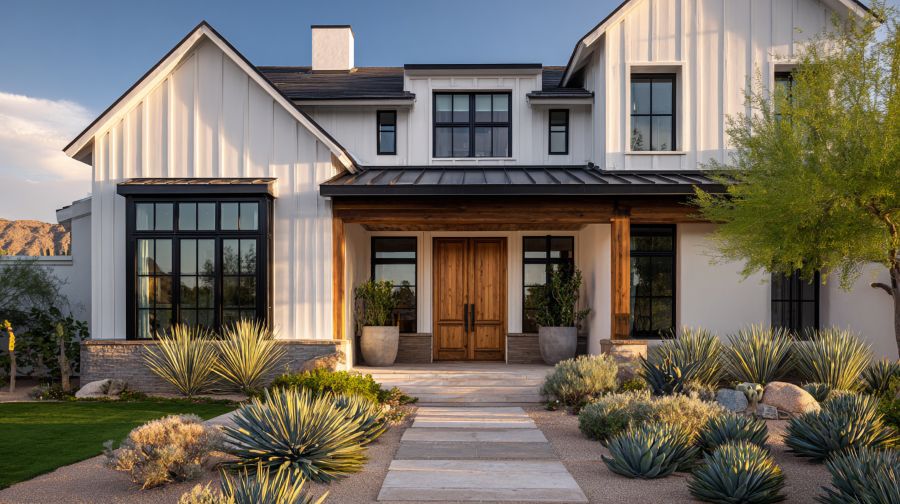
Black Frames and the Materials That Matter Most
Not all black window frames are built the same way, and the material behind the finish determines how a window performs over years of use just as much as it determines how the window looks on the day it goes in. Understanding the substrate options is essential to making a choice that holds up.
Aluminum with a thermal break is the most widely used substrate for black-framed windows in residential construction today. It holds a powder-coated or anodized finish reliably, resists corrosion in most climates, and allows for slim profiles that maximize the glass area relative to the frame footprint. The thermal break itself is a non-conductive material inserted between the interior and exterior portions of the frame, and it is critical for energy performance in any climate with meaningful temperature swings.
Steel offers the slimmest possible profiles and a finish quality that sits in a genuinely different visual category than aluminum. Authentic steel-framed windows carry weight, cost, and a level of precision craftsmanship that aluminum approximates but does not fully replicate. For projects where the window is intended to be a central architectural feature rather than a supporting element, steel justifies the premium.
Fiberglass has grown substantially as an option for dark-framed windows. It holds finish reliably, performs across a wide range of climates including high-heat environments, and offers a middle path between the cost of steel and the ubiquity of aluminum without significant compromise on either side.
Vinyl in black or dark finishes is available and widely marketed, but it warrants closer scrutiny in warm climates. Darker vinyl frames absorb more heat, which can accelerate the thermal expansion and contraction cycle that affects seal longevity over time. In moderate climates this is manageable. In high-heat regions it becomes a more meaningful consideration worth discussing with your installer before committing.
Pairing Black Frames With Your Exterior Palette
Getting the exterior color combination right is where many homeowners either land on something genuinely stunning or end up with something that looks heavier and more closed-in than they intended. The frame color does not operate in isolation. It responds to everything around it, and the wrong surrounding palette can undermine even a perfectly specified window.
Some combinations that consistently deliver strong results:
- Crisp white or warm off-white siding paired with black frames is the most established combination. The contrast is clean, reads as intentional from the street, and photographs well in almost any light condition.
- Warm wood tones including natural cedar, stained board and batten, or wood composite siding pair beautifully with black frames. The warmth of the wood softens the sharpness of the dark frame and prevents the exterior from feeling severe.
- Soft sage, muted olive, or warm gray exteriors create a more layered and sophisticated result when paired with black frames rather than going for full high-contrast impact.
- Dark exteriors with black frames can absolutely work but require careful proportional thinking. The frame needs to be visually distinct enough to register as an intentional design decision rather than disappearing into the surrounding wall color.
Interior designer and renovation consultant Rachel Moreno, who has specified windows across commercial and high-end residential projects throughout the Southwest, offered a perspective that captures the core challenge well. "Black frames reward intention. When the rest of the exterior is thought out and the proportions are right, they look like the house was designed that way from the beginning. When they are just dropped in without considering what surrounds them, they can feel like a bold choice that nobody fully committed to."
Black Is Not a Trend. It Is a Decision.
What the past several years have demonstrated about black window frames is that they were never simply a design cycle waiting to exhaust itself. They represent a genuine re-engagement with the idea that windows are not neutral architectural elements. They are visible lines that define the face of a building, and the color and material of those lines carries weight that deserves deliberate thought rather than a default selection driven by what looked good on someone else's renovation account.
The question heading into 2026 is not whether black frames are still worth considering. They are, and for the right project they remain one of the most impactful and lasting finish decisions a homeowner can make. The real question is whether they are the right fit for your specific structure, your climate, your interior light conditions, and the quality level you are prepared to invest in. A well-specified, properly installed black-framed window in the right context will look just as considered in fifteen years as it does on day one. That kind of longevity is not something that can be said about every design choice, and it is the most honest reason to take the conversation seriously before the first measurement is made.

I’ve used the The Metal Window before and it was great! I was pleased once again. Staff was very nice and really went the extra mile to help us out!
Ralph
Professionalism, Punctuality, Quality, Responsiveness, Value. Everyone was professional and offered amazing custom window service.
